
As artificial intelligence features transition from cloud-based datacenters to local smartphones, laptops, and edge hardware, traditional processing architectures face severe efficiency bottlenecks.
A Neural Processing Unit (NPU) is a domain-specific silicon circuit built expressly to accelerate deep learning algorithms locally on a device. Unlike general-purpose CPUs or graphics-focused GPUs, NPUs are designed specifically for low-power matrix and tensor mathematics, delivering real-time artificial intelligence capabilities without overwhelming the device’s battery or thermal constraints.
1. Architectural Blueprint: CPU vs. GPU vs. NPU
Understanding why NPUs are essential requires looking at how different silicon architectures handle computational workloads:
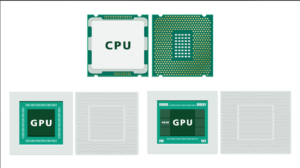
                       SOC COMPONENT WORKLOAD DISTRIBUTION

┌────────────────────────┐    ┌────────────────────────┐    ┌────────────────────────┐
│          CPU           │    │          GPU           │    │          NPU           │
│  (Sequential Master)   │    │  (Parallel Graphics)   │    │  (Tensor Accelerator)  │
│                        │    │                        │    │                        │
│ • Low Core Count       │    │ • Thousands of Cores   │    │ • Systolic Arrays      │
│ • Branch Prediction    │    │ • Dynamic 3D Rendering │    │ • INT8 / INT4 Quant.   │
│ • OS & Application Code│    │ • High FP32 Throughput │    │ • Max Efficiency/Watt  │
└────────────────────────┘    └────────────────────────┘    └────────────────────────┘
-
Central Processing Unit (CPU): Built for serial logic, complex instruction branch prediction, and multi-task operating system management. While versatile, performing continuous neural network matrix multiplication on a CPU leads to poor energy efficiency and high latency.
-
Graphics Processing Unit (GPU): Highly parallel architecture designed for floating-point calculations ($FP32/FP16$) required in 3D rendering and heavy model training. However, running continuous, always-on AI workloads on a GPU drains mobile battery packs rapidly due to its high power draw.
-
Neural Processing Unit (NPU): Uses specialized hardware blocks (such as Systolic Arrays) optimized for low-precision tensor operations ($INT8/INT4$). By removing instruction-decode overhead and optimizing dataflow, NPUs achieve exceptional performance-per-watt efficiency.
2. Technical Feature Breakdown
| Processor Metric | Central Processing Unit (CPU) | Graphics Processing Unit (GPU) | Neural Processing Unit (NPU) |
| Primary Execution Model | Scalar & Branching Logic | SIMD / SIMT (Vector/Parallel) | Tensor & Matrix Dataflow |
| Primary AI Role | System orchestration | Large-scale AI training & cloud inference | Low-power, on-device AI inference |
| Typical Data Precision | FP64 / FP32 | FP32 / FP16 / BF16 | INT8 / INT4 / FP16 Quantized |
| Power Consumption | Moderate to High | High (15W to 700W+) | Ultra-Low (0.5W to 15W) |
| Efficiency Metric | Low TOPS/Watt | Moderate TOPS/Watt | High (50–200+ TOPS/Watt) |
3. How NPUs Execute On-Device AI Models
NPUs rely on specific architectural strategies to process neural networks directly on local hardware:
1. Systolic Array Computing Architecture
Instead of constantly fetching data from main RAM memory for every mathematical operation—which consumes vast amounts of energy—an NPU feeds data through a grid of multiply-accumulate (MAC) cells called a systolic array. Data flows through neighboring cells step-by-step like a wave, performing hundreds of matrix calculations per clock cycle with minimal memory access overhead.
2. Quantization ($FP32 \rightarrow INT8/INT4$)
Neural networks are typically trained in cloud datacenters using high-precision 32-bit floating-point numbers ($FP32$). NPUs utilize quantized weights, scaling values down to 8-bit ($INT8$) or 4-bit ($INT4$) integers. This reduces model memory requirements by 75–80% with negligible loss in practical accuracy, allowing large models to fit inside a phone or laptop’s local RAM.
3. Integrated SRAM & Zero-Copy Caching
Traditional processors spend up to 80% of their power moving data across the memory bus between the CPU and DRAM. NPUs feature dedicated high-bandwidth SRAM (Static RAM) scratchpads baked directly alongside the compute units. Entire neural network layer weights are stored directly inside the NPU core during execution, eliminating memory bus bottlenecks.
4. Key Advantages of On-Device NPU Acceleration
-
Privacy & Security: Sensitive user data—such as voice recordings, facial biomechanics, photos, and personal documents—is processed entirely on the physical device rather than uploaded to third-party cloud servers.
-
Ultra-Low Latency: Eliminates network round-trip delays, enabling instantaneous real-time applications such as camera auto-framing, live voice translation, and gaze correction.
-
Offline Functionality: AI features remain fully functional without an active internet or cellular data connection.
-
Battery Conservation: Offloading continuous background AI tasks (such as image signal processing or audio noise cancellation) to an efficient NPU prevents high battery drain on mobile devices.
5. Practical Consumer Applications Powered by NPUs
                            ON-DEVICE NPU WORKLOAD FLOW

┌────────────────────────┐      ┌────────────────────────┐      ┌────────────────────────┐
│  Real-Time Sensor Feed │ ───► │ NPU Hardware Execution │ ───► │ Instant UI Response    │
│                        │      │                        │      │                        │
│ • Camera Sensor / Mic  │      │ • INT8 MatMul Pipeline │      │ • Instant Translation  │
│ • On-Screen Text/Image │      │ • Local LLM Decoding   │      │ • Image Enhancement   │
│ • System Telemetry     │      │ • Zero-Cloud Latency   │      │ • Live Noise Removal   │
└────────────────────────┘      └────────────────────────┘      └────────────────────────┘
-
Computers & Laptops (Copilot+ / Apple Silicon Neural Engine): Powers real-time background blur, gaze tracking, context-aware system search, text summarization, and local Small Language Models (SLMs).
-
Smartphones & Computational Photography: Executes instant semantic segmentation during photo capture—identifying hair, skin, sky, and clothing layers to apply individual image-enhancement adjustments in milliseconds.
-
Voice & Audio Processing: Enables real-time background noise suppression and low-power on-device voice recognition for virtual assistants without waking up high-power system components.