
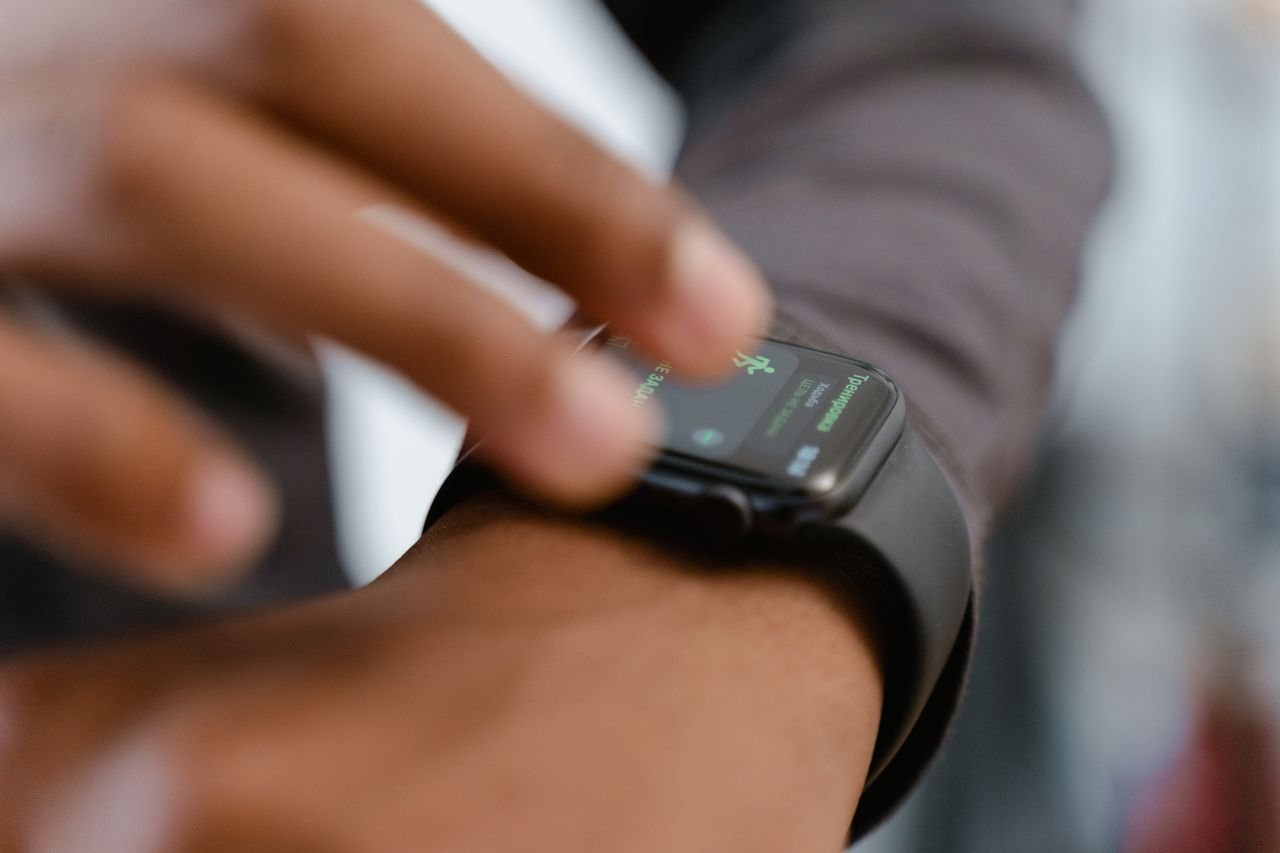
Smartwatches have evolved from basic step counters into sophisticated biometric monitoring stations. Packed with miniaturized optical, electrical, and thermal sensors, these consumer wearables track vital signs, detect asymptomatic heart conditions, and monitor daily physical strain.
However, evaluating smartwatches as personal health monitors requires understanding both the underlying sensor engineering and the limitations of consumer-grade non-invasive tracking.
1. Primary Sensing Technologies Inside Smartwatches
                     SMARTWATCH BIOMETRIC SENSOR ARCHITECTURE

┌────────────────────────┐    ┌────────────────────────┐    ┌────────────────────────┐
│      PPG Optical       │    │     ECG Electrical     │    │  Bioimpedance / Thermal│
│    (Blood Flow/SpO2)   │    │  (Heart Rhythm/AFib)   │    │ (Body Comp/Temperature)│
│                        │    │                        │    │                        │
│ • Green/Red/IR LEDs    │    │ • Case & Crown Electrodes│   │ • Micro-Current Array  │
│ • Photodiode Receivers │    │ • Single-Lead Loop     │    │ • Thermistor Probe     │
│ • Volumetric Pulse Wave│    │ • Electrical P-Q-R-S-T │    │ • Fat/Water/Skin Temp  │
└────────────────────────┘    └────────────────────────┘    └────────────────────────┘
Photoplethysmography (PPG)
Optical PPG is the foundation of modern wrist wearables.
-
How It Works: Tiny Light Emitting Diodes (LEDs) shine light through the skin into the microvascular capillary bed. A photodiode measures variations in light reflection. Because blood absorbs light, each arterial contraction alters reflection intensity, producing a volumetric pulse wave.
-
Green Wavelengths (525 nm): Used for continuous daily heart rate (HR) and Heart Rate Variability (HRV) tracking. Green light offers optimal absorption contrast in shallow wrist capillaries.
-
Red & Infrared Wavelengths (660 nm / 940 nm): Used for Pulse Oximetry ($\text{SpO}_2$). By calculating the ratio of red to infrared light absorption, the sensor estimates the percentage of oxygenated hemoglobin versus deoxygenated hemoglobin.
Electrocardiogram (ECG / EKG)
-
How It Works: While PPG measures fluid volume, ECG measures the electrical impulses generated by the heart muscle.
-
Mechanism: When a user places a finger on the smartwatch bezel or digital crown, it completes a circuit across the chest between both arms. The watch records a single-lead trace capable of identifying abnormal electrical depolarization patterns.
Bioelectrical Impedance Analysis (BIA) & Thermistors
-
Body Composition: By sending an imperceptible high-frequency electrical current through the upper torso, BIA sensors measure resistance (impedance) to estimate muscle tissue mass, body fat percentage, and water hydration levels.
-
Skin Temperature Probes: High-precision thermistors contact the skin to record baseline body temperature variations during sleep, aiding cycle tracking and early illness detection.
2. Health Monitoring Features & Real-World Accuracy
| Health Metric | Sensor Used | Typical Accuracy vs. Clinical Gold Standard | Key Performance Factors & Limitations |
| Resting Heart Rate (RHR) | Green PPG | High (95%–99%) | Matches clinical ECG monitors within $\pm 1$–$2$ BPM during stationary state. |
| Workout Heart Rate | Green PPG + Accelerometer | Moderate to High (80%–92%) | Movement artifacts (e.g., wrist flexion, weightlifting, running) degrade PPG signals. |
| Atrial Fibrillation (AFib) | Single-Lead ECG | High Sensitivity (>95%) | Cleared by regulatory bodies (FDA, CE) for screening; cannot diagnose complex arrhythmias or heart attacks. |
| Blood Oxygen ($\text{SpO}_2$) | Red / IR PPG | Moderate (85%–93%) | Highly sensitive to skin contact pressure, ambient temperature, and movement; not a replacement for medical oximeters. |
| Sleep Tracking | PPG + Accelerometer + Temp | Moderate (65%–75% stage accuracy) | Accurately tracks total sleep duration, but often misclassifies deep sleep vs. REM relative to polysomnography (PSG). |
| Ambulatory Blood Pressure | Optical Pulse Wave Analysis / Inflatable Airbag | Low to Moderate | Optical methods require frequent manual cuff calibration. Models with micro-airbags yield higher accuracy. |
3. Signal Noise & Environmental Challenges
                 FACTORS AFFECTING WRIST PPG ACCURACY

 ┌─────────────────────────────────────────────────────────────────┐
 │                     BIOMECHANICAL ARTIFACTS                     │
 ├─────────────────────────────────────────────────────────────────┤
 │ • Motion Noise: Arm swings create micro-gaps between skin & LED │
 │ • Skin Tone: Higher melanin increases light attenuation         │
 │ • Perfusion: Cold weather causes peripheral vasoconstriction    │
 │ • Fit/Tattoos: Loose bands allow ambient light leakage          │
 └─────────────────────────────────────────────────────────────────┘
-
Motion Artifacts: Physical movement disrupts optical sensor alignment against the skin, generating mechanical signal noise that can overpower the optical pulse wave.
-
Skin Pigmentation & Tattoos: Melanin absorbs green optical wavelengths. Dense epidermal melanin or dark tattoo ink restricts light transmission to deeper blood vessels, requiring adaptive LED power management algorithms.
-
Peripheral Vasoconstriction: In cold environments, blood vessels near the skin surface constrict, drastically reducing blood volume pulse amplitudes at the wrist.
4. The Frontier: Non-Invasive Continuous Glucose & Blood Pressure
A primary focus in consumer health tech is achieving non-invasive, continuous glucose monitoring (CGM) without skin perforation.
-
Raman Spectroscopy & Multi-Spectral Photomics: Research teams are testing high-frequency infrared laser spectroscopy to read glucose concentration through interstitial fluid without skin pricking.
-
Technological Challenge: Glucose molecules produce extremely faint optical signal variations relative to water, protein, and red blood cells. Currently, no consumer smartwatch features FDA-cleared non-invasive glucose monitoring.