
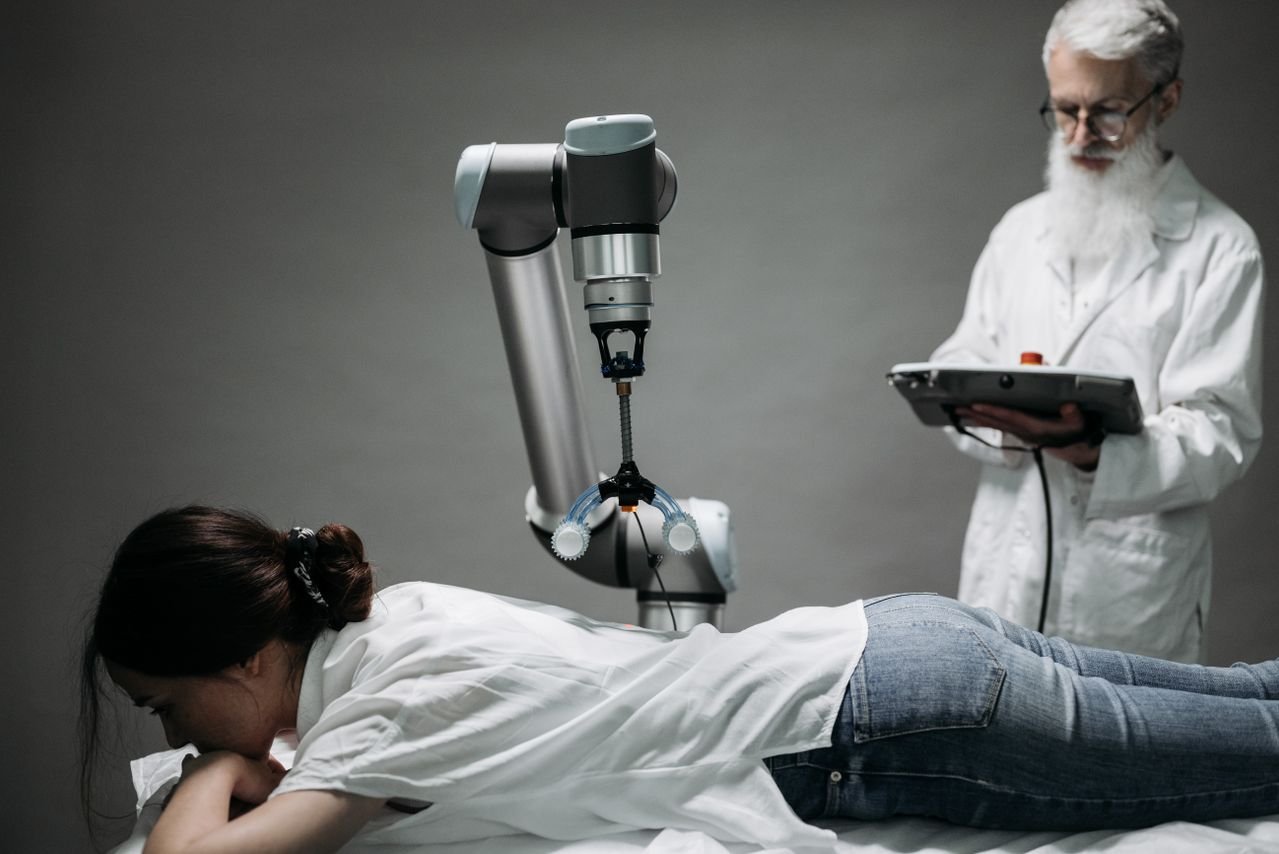
Artificial intelligence has officially transitioned from a futuristic concept to a vital clinical tool. In modern hospitals, emergency rooms, and research laboratories, machine learning models and deep neural networks are doing what human bandwidth alone cannot: processing millions of data points in real time to spot anomalies, predict crises, and fast-track treatments.
Far from replacing physicians, AI acts as an invaluable clinical co-pilot, driving remarkable improvements in patient outcomes. Here are five powerful real-world applications where AI is actively saving lives today.
1. Early Cancer Detection and Medical Imaging
Radiology and oncology rely heavily on visual pattern recognition, an area where AI algorithms excel. Deep learning models trained on millions of historical scans can identify microscopic indicators of disease—such as early-stage pulmonary nodules, microcalcifications in mammograms, and subtle brain lesions—often long before they are visible to the human eye.
-
The Impact: Catching breast, lung, or skin cancer in Stage 0 or Stage 1 drastically increases survival rates. AI tools reduce false negatives and minimize diagnostic delays, ensuring patients receive immediate, life-saving interventions.
2. Sepsis Prediction and ICU Monitoring
Sepsis is a medical emergency where the body’s overactive response to infection triggers multi-organ failure. Because it moves rapidly, every minute counts. Predictive AI algorithms integrated into Electronic Health Records (EHR) continuously monitor patient vitals, lab results, and nursing notes to flag the earliest signs of sepsis hours before clinical symptoms visibly escalate.
-
The Impact: Clinical trials and real-world hospital deployments of predictive algorithms have demonstrated substantial drops in in-hospital mortality rates by prompting doctors to administer antibiotics and fluids much earlier in the timeline.
3. Stroke Triage and Emergency Routing
When a stroke occurs, millions of brain cells die every minute. Traditional workflows often involve delays as medical scans are queued, reviewed, and manually routed to specialists. AI-powered triage platforms instantly analyze CT scans the moment they are captured, automatically detecting large vessel occlusions and alerting on-call neurologists via secure mobile notifications.
-
The Impact: These systems compress “door-to-needle” times—the window between a patient arriving at the hospital and receiving life-restoring clot-busting therapy—preventing permanent paralysis or death.
4. Precision Medicine and Genomic Profiling
Every patient’s genetic makeup reacts differently to diseases and treatments. Precision medicine leverages AI to parse complex genomic sequencing data alongside a patient’s medical history, lifestyle, and tumor mutations.
-
The Impact: Rather than utilizing a generic “one-size-fits-all” chemotherapy or pharmaceutical regimen, oncologists use AI-driven platforms to match patients with precise targeted therapies that attack specific cancer mutations while sparing healthy tissue, significantly extending life expectancy.
5. Accelerated Drug Discovery and Development
Historically, bringing a new medication from concept to pharmacy shelves took over a decade and billions of dollars. AI transforms this pipeline by simulating molecular interactions, predicting protein folding structures, and scanning massive biological libraries in days instead of years.
-
The Impact: By optimizing clinical trial design and identifying ideal drug candidates faster, AI drastically reduces the time required to deploy life-saving therapeutics for infectious outbreaks, rare genetic diseases, and complex oncology challenges.
Overview of AI Applications in Modern Clinical Care

| Application Area | Core Technology | Primary Life-Saving Benefit |
| Medical Imaging | Convolutional Neural Networks (CNNs) | Detects early-stage tumors and anomalies with high precision |
| Sepsis Tracking | Predictive Analytics & ML | Flags physiological deterioration hours before visible symptoms |
| Stroke Triage | Computer Vision & Automated Alerts | Dramatically accelerates emergency response times |
| Precision Medicine | Genomic AI & Pattern Matching | Tailors custom treatment options to unique genetic profiles |
| Drug Discovery | Deep Learning & Molecular Modeling | Synthesizes and tests novel therapeutics at unprecedented speeds |
As machine learning algorithms become more integrated into clinical workflows, healthcare is shifting from a reactive model—treating illnesses after symptoms manifest—to a proactive, predictive discipline. By giving doctors sharper insights and more processing power, AI is fundamentally reshaping the boundaries of modern medicine and protecting human life at scale.