

The Industrial Internet of Things (IIoT)—often described as the operational backbone of Industry 4.0 and 5.0—refers to the network of interconnected industrial sensors, instruments, edge compute gateways, and cloud software deployed across manufacturing plants, energy grids, and logistics hubs.
While consumer IoT focuses on personal convenience (smart watches, home automation), IIoT focuses on high-precision operational resilience, real-time safety, efficiency, and automated decision-making.
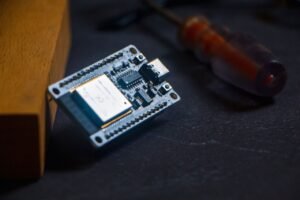
1. The 5-Layer Architectural Stack of IIoT
To turn physical machine signals into business intelligence, industrial systems rely on a structured, multi-layer architecture:
-
Perception & Sensing Layer: Smart sensors (vibration, thermal, acoustic, pressure) and actuators embedded directly into Programmable Logic Controllers (PLCs) and robotics.
-
Connectivity & Protocol Translation: Converting legacy OT protocols (Modbus, Ethernet/IP, PROFIBUS) into unified web transport standards (OPC UA, MQTT) via industrial cellular or private 5G networks.
-
Edge Processing Layer: Edge gateways running local neural inference, filtering up to 90% of raw noise before data reaches the cloud while maintaining sub-millisecond response loops.
-
Data Management & Platform Layer: Unified Namespaces (UNS), enterprise historians, and cloud platforms (AWS IoT SiteWise, Azure IoT Hub, Siemens Insights Hub) that organize and store high-velocity time-series data.
-
Application & Business Integration Layer: Predictive maintenance dashboards, AI digital twins, Enterprise Resource Planning (ERP), and Manufacturing Execution Systems (MES) integrations.
2. Core Industrial Applications
                       KEY APPLICATIONS OF IIoT

┌────────────────────────┐    ┌────────────────────────┐    ┌────────────────────────┐
│ Predictive Maintenance │    │ Digital Twin Technology│    │ Autonomous Operations  │
├────────────────────────┤    ├────────────────────────┤    ├────────────────────────┤
│ Tracks equipment health│    │ Creates physics-based  │    │ Integrates AMR/AGV     │
│ indicators to prevent  │    │ 3D virtual models for  │    │ robotics with real-    │
│ unexpected downtime.   │    │ continuous simulation. │    │ time inventory flows.  │
└────────────────────────┘    └────────────────────────┘    └────────────────────────┘
A. Predictive Maintenance (PdM) vs. Reactive Repair
-
Traditional Approach: Fixing equipment after failure (reactive) or adhering to strict calendar-based servicing (preventive).
-
IIoT Approach: Acoustic and vibration telemetry sensors monitor bearing wear and thermal strain in real time. Machine learning models flag subtle anomalies weeks before hardware failure, reducing unscheduled plant downtime by up to $20\text{–}40\%$.
B. Digital Twins & Closed-Loop Control
-
A Digital Twin is a real-time virtual replica of a physical asset or complete production line.
-
IIoT telemetry constantly updates the digital twin’s physics and behavioral models, allowing operators—and autonomous AI loops—to test production adjustments digitally before deploying changes to physical machinery.
C. Fleet, Asset, and Supply Chain Visibility
-
Embedded GPS, RFID, and environmental sensors track raw materials and finished goods in transit. Real-time temperature logs ensure strict cold-chain compliance in pharmaceuticals and food manufacturing.
3. Operational Technology (OT) vs. Information Technology (IT)
A major hurdle in IIoT deployment is bridging the operational gap between factory plant floors (OT) and enterprise software networks (IT).
| Feature / Metric | Operational Technology (OT) | Information Technology (IT) |
| Primary Focus | Physical safety, uptime, and real-time control | Data security, privacy, and business velocity |
| Lifecycle Horizon | $10\text{–}25$ years (Industrial machinery) | $3\text{–}5$ years (Software & server refreshes) |
| Acceptable Latency | Ultra-Low ($<1\text{ ms} – 10\text{ ms}$) | Flexible ($100\text{ ms} – \text{seconds}$) |
| Core Protocols | Modbus, OPC UA, PROFIBUS, Ethernet/IP | HTTP, REST, MQTT, SQL, GraphQL |
| Failure Consequence | Equipment damage, environmental or safety hazard | Data loss, service downtime, financial impact |
4. Key Deployment Challenges & Solution Strategies
-
Cybersecurity Risk Exposure: Connecting legacy OT machinery to IP networks increases attack surfaces. Strategy: Deploy Zero-Trust Network Access (ZTNA), strict OT/IT micro-segmentation, and unidirectional security gateways.
-
Data Silos & Fragmentation: Older factories run proprietary, isolated PLCs. Strategy: Standardize on open protocols like OPC UA combined with a Unified Namespace (UNS) event broker.
-
High Initial Infrastructure Costs: Retrofitting massive industrial facilities can carry significant upfront costs. Strategy: Deploy cellular-first (4G/5G) edge gateways that bypass complex corporate network re-architecting to demonstrate fast ROI on key bottleneck machinery.