
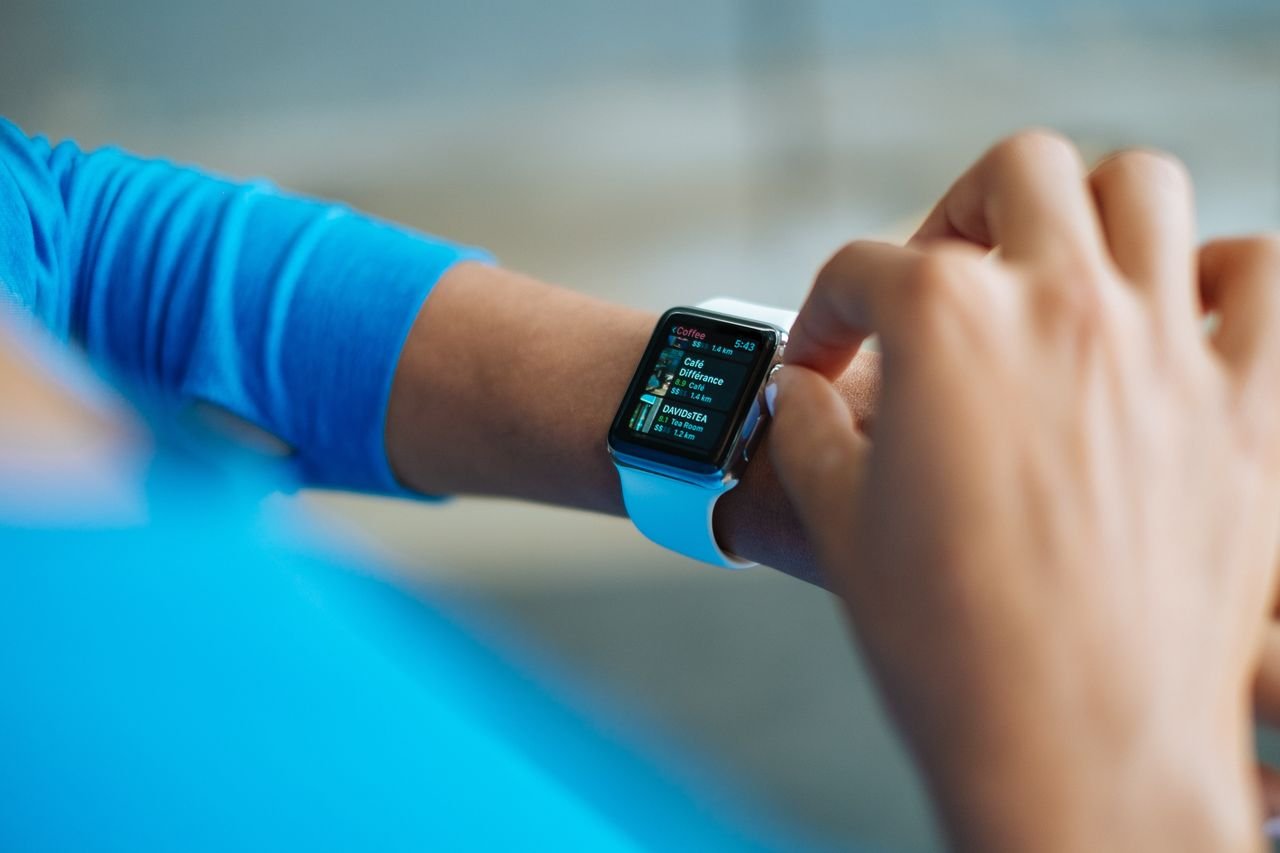
While smartwatches established the consumer wearable market, the sector is rapidly diversifying into specialized form factors. Driven by advancements in micro-electronics, flexible sensor arrays, and low-power spatial computing, the next generation of wearables integrates seamlessly into everyday items—shifting from wrist-mounted screens to ambient, friction-free interfaces.
1. Next-Generation Form Factors


Smart Rings
-
Core Value: Continuous passive health tracking without screen fatigue or bulk.
-
Biometric Advantage: The finger provides a significantly clearer photoplethysmography (PPG) signal than the top of the wrist due to arterial density in the digital arteries.
-
Key Use Cases: Sleep architecture monitoring, basal body temperature tracking, Heart Rate Variability (HRV), and contact-free NFC payments.
Smart Glasses & Spatial Displays
-
Core Value: Hands-free context delivery via micro-speakers, multimodal AI vision, and heads-up micro-displays.
-
Optical Engine: Micro-LED engines project contextual data directly onto optical waveguides embedded within everyday eyewear lenses.
-
Key Use Cases: Turn-by-turn navigation overlay, real-time speech translation, spatial audio capture, and contextual AI assistance.
Smart Clothing & E-Textiles
-
Core Value: Direct skin-contact monitoring over wide surface areas, eliminating localized sensor pressure.
-
Integration Technology: Conductive polymer threads and flexible conductive inks are woven directly into compression garments and athletic wear.
-
Key Use Cases: Surface Electromyography (sEMG) for real-time muscle fatigue analysis, posture correction tracking, and medical-grade 12-lead ECG recording.
2. Architectural Comparison across Form Factors
| Form Factor | Primary Sensors | Battery Life Range | Major Technical Constraints | Primary Target Audience |
| Smart Rings | PPG, Accelerometer, NTC Thermistor | 4 – 7 Days | Spatial battery limits, lack of active display | Sleep tracking, recovery management, wellness monitoring |
| Smart Glasses | Micro-cameras, IMU, Waveguide Display, Beamforming Mics | 4 – 14 Hours | Thermal dissipation near head, battery weight vs. comfort balance | Field technicians, commuters, content creators, spatial UI users |
| Smart Apparel | Flexible E-textile Electrodes, Strain Gauges | 8 – 24 Hours (Detachable Pods) | Washability durability, fabric stretch distortion | Elite athletes, physical therapy patients, industrial ergonomics |
| Hearables | In-ear Optical PPG, Core Temp Probes, Accelerometers | 5 – 10 Hours | Form-factor miniaturization, acoustic fit variations | Runners, gym-goers, auditory health tracking users |
3. Underlying Technology Enablers
                KEY ENABLERS OF BEYOND-WRIST WEARABLES

┌────────────────────────┐    ┌────────────────────────┐    ┌────────────────────────┐
│ Flexible Circuitry &   │    │  Ultra-Low-Power AI    │    │ Ambient Energy         │
│  Sub-surface Battery   │    │    (Edge Processing)   │    │   Harvesting Arrays    │
├────────────────────────┤    ├────────────────────────┤    ├────────────────────────┤
│ • Curved solid-state   │    │ • On-device TinyML     │    │ • Thermoelectric body  │
│   cells                │    │   inference            │    │   heat generators      │
│ • Stretchable copper   │    │ • Zero-latency signal  │    │ • Micro-photovoltaic   │
│   traces               │    │   filtering            │    │   dyes                 │
└────────────────────────┘    └────────────────────────┘    └────────────────────────┘
-
TinyML (Edge Artificial Intelligence): Modern wearable sensors run machine learning models directly on low-power microcontrollers, analyzing biometric data locally without relying on constant cloud streaming.
-
Flexible Micro-Electronics: Stretchable circuit boards and conformable battery geometries allow electronics to bend along human joints and contours without mechanical degradation.
-
Thermoelectric & Kinetic Harvesting: Experimental energy-harvesting modules convert body heat differentials and physical motion into microwatts of power, extending passive sensor lifespans.
4. Market Trajectory: The Shift to Ambient Intelligence
The expansion of wearable tech beyond smartwatches marks a shift toward ambient computing—where technology operates continuously in the background rather than demanding active user interaction. As miniaturization improves, health monitoring will transition from episodic checking on screens to continuous, imperceptible feedback loops managed by personal AI agents.