
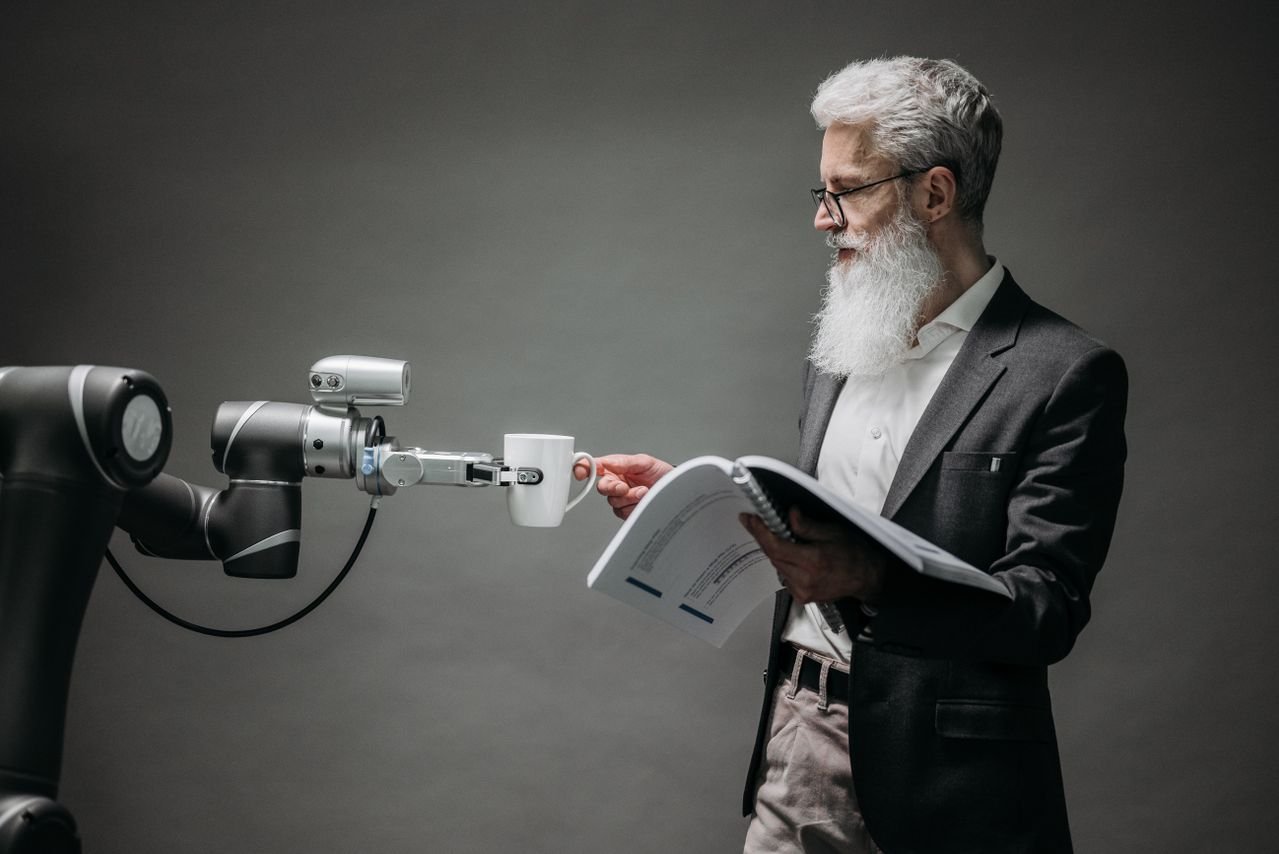
The debate over whether Artificial Intelligence will replace software engineers has shifted from speculative fear to operational reality. AI is not replacing developers; it is replacing the traditional, syntax-focused method of writing code.
As AI tools move from basic inline auto-complete to autonomous agentic workflows, the role of the developer is undergoing its biggest evolution since the transition from assembly language to high-level programming.
The Evolution: From Syntax Writers to System Architects
To understand where software engineering is going, it helps to look at how the developer’s toolkit has evolved over time:
Evolution of Software Engineering Workflows

[ Phase 1: Manual Coding ]     ---> Write raw logic, syntax, and memory management by hand.
[ Phase 2: Assisted Coding ]   ---> Auto-complete, IDE linters, and Stack Overflow queries.
[ Phase 3: Agentic Co-Pilot ]  ---> Autonomous agents draft PRs, run tests, and refactor whole repos.
[ Phase 4: Systems Orchestration ] -> Humans direct high-level architecture; AI handles execution.
Rather than eliminating the need for human judgment, AI moves developers up the abstraction stack. Engineers spend less time writing boilerplate CRUD code and more time defining system boundaries, reviewing agentic outputs, and managing business trade-offs.
What AI Can Do vs. What Still Requires Humans
While modern AI agents can execute multi-file changes, fix bugs, and draft pull requests in minutes, significant limitations prevent complete automation.
| Task Category | AI Agent Capability | Human Developer Requirement |
| Boilerplate & Syntax | Highly Autonomous; generates clean, repeatable code. | Minimal; light code review and validation. |
| Debugging & Unit Tests | Fast; traces log errors and writes unit tests rapidly. | Validates edge cases and logical assumptions. |
| System Architecture | Generates templates and evaluates common patterns. | Critical; balances cost, latency, security, and scalability trade-offs. |
| Business Logic & Intent | Struggles with ambiguous or changing specs. | Essential; translates human business goals into technical requirements. |
| Security & Compliance | Spot-checks known vulnerability patterns. | Accountable; ensures data privacy, compliance, and zero-trust design. |
Why the Developer Role Is Changing, Not Disappearing
-
The Demand for Software Is Elastic: Lowering the cost and time required to build software does not mean companies build less software; it means they build more. Organizations now tackle backlog items, technical debt, and exploratory features that were previously too expensive to prioritize.
-
Context and Trade-off Navigation: An AI can suggest five ways to structure a microservices architecture, but it cannot know your organization’s cloud budget limits, legacy infrastructure constraints, or risk tolerance.
-
The “Last Mile” Problem and Hallucinations: AI outputs require verification. Unchecked AI-generated code introduces subtle logic bugs, security vulnerabilities, and architectural drift if not supervised by experienced engineers.
The Rise of the “AI-Augmented” Engineer
The software engineers thriving in this new environment focus on high-leverage skills:
-
Task Decomposition: The ability to break ambiguous product goals into modular, well-scoped prompts and constraints for AI agents.
-
Context Engineering & Retrieval: Structuring codebases, documentation, and RAG pipelines so AI tools have the exact context needed to write clean code.
-
Code Review & Auditing: Reading and verifying large volumes of AI-generated code quickly to maintain system health, performance, and security.
-
Domain Mastery & Product Sense: Understanding customer needs deeply enough to ensure the software actually solves the right business problems.
The Verdict

AI will not replace software developers. However, developers who leverage AI will replace developers who do not.
The profession is evolving from manual code construction to high-level orchestration, product direction, and system design—making human oversight and engineering fundamentals more critical than ever.