
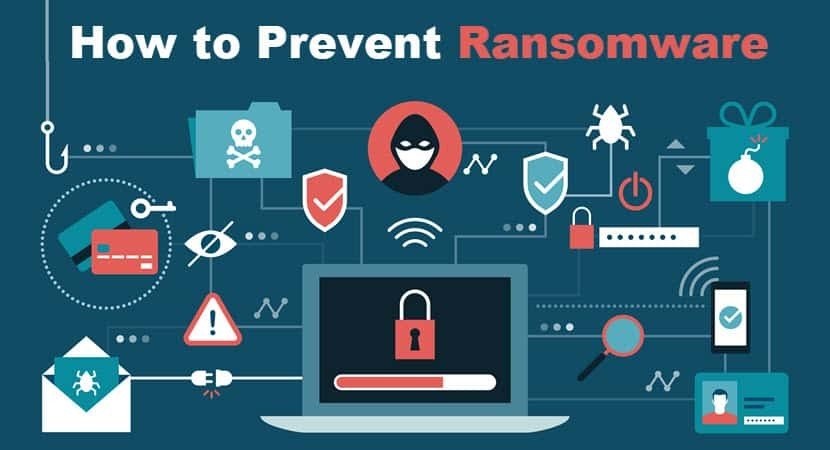
Ransomware remains one of the most destructive cyber threats facing organizations today. Rather than being a simple virus that immediately locks a computer, modern ransomware operates as an organized, multi-stage operation—often executed by specialized Cybercrime-as-a-Service (CaaS) syndicates.
To defend against ransomware effectively, organizations must understand the anatomy of an attack lifecycle, deploy proactive prevention controls, enforce active blast-radius mitigation, and maintain a resilient recovery strategy.
How Ransomware Works: The Attack Lifecycle
A ransomware attack rarely happens instantly. Attackers often lurk undetected inside a target network for days or weeks before deploying the final encryption payload.
The Modern Extortion Landscape
Ransomware groups have evolved beyond simple file encryption into triple and quadruple extortion schemes:
-
Double Extortion: Encrypting local files while threatening to leak stolen confidential data on public dark web sites.
-
Triple Extortion: Contacting a victim’s customers, partners, or regulatory authorities directly to notify them that their personal data was stolen in the breach.
-
Quadruple Extortion: Launching Distributed Denial-of-Service (DDoS) attacks against the target’s public services to force executive teams to the negotiation table.
Phase 1: Prevention Strategies
Stopping ransomware requires closing the attack vectors adversaries exploit during initial access.
-
Phishing-Resistant Authentication: Enforce hardware-based Multi-Factor Authentication (MFA) across all remote access gateways, corporate email, and cloud applications.
-
Aggressive Vulnerability Patching: Prioritize automated patch deployment for perimeter-facing assets, firewalls, VPN concentrators, and hypervisors within 24 to 48 hours of critical CVE disclosures.
-
Disable Remote Access Protocol Ports: Close publicly exposed RDP and SSH ports (e.g., Port 3389) to the open internet, forcing all remote sessions through Zero Trust Network Access (ZTNA) connectors.
-
Credential Hygiene: Deploy enterprise password managers and eliminate hardcoded administrator passwords using Local Administrator Password Solution (LAPS).
Phase 2: Blast Radius Mitigation
If an attacker succeeds in breaching the perimeter, internal security controls must prevent them from reaching core databases and backup infrastructure.
-
Network Microsegmentation: Isolate critical workloads into logical zones. Ensure work-from-home laptops cannot communicate directly with production servers.
-
Immutable & Air-Gapped Backups: Adhere to the 3-2-1-1-0 Backup Rule:
-
3 copies of data
-
2 different storage media types
-
1 copy off-site
-
1 copy immutable (write-once, read-many) or air-gapped completely offline
-
0 errors after automated restore testing
-
-
Least Privilege Access: Strip standard users of local administrator rights to prevent unauthorized script execution and credential harvesting.
Phase 3: Incident Response & Recovery Workflow
When ransomware strikes, a fast, structured response minimizes long-term operational damage.
Ransomware Response Lifecycle

[ 1. Isolation ] ────► Disconnect infected systems from Wi-Fi/LAN immediately.
        │
        ▼
[ 2. Triage ] ────────► Identify patient zero, strain variant, and breach scope.
        │
        ▼
[ 3. Remediation ] ───► Evict attacker persistence mechanisms and rebuild systems.
        │
        ▼
[ 4. Restoration ] ──► Restore data strictly from clean, verified immutable backups.
-
Containment: Immediately isolate infected subnetworks by severing network connections (unplug Ethernet, disable Wi-Fi). Do not power down machines immediately if memory dumps are required for forensic analysis.
-
Forensic Triage: Identify the strain variant, determine the point of entry (patient zero), and check whether data exfiltration occurred before attempting system wipes.
-
Eradication: Rebuild compromised operating systems from trusted gold images rather than attempting to clean infected installations manually.
-
Restoration: Restore databases and file shares strictly from verified, clean immutable backup snapshots after patching the original entry vulnerability.
Summary Framework: Prevention vs. Recovery
| Security Domain | Key Mechanism | Operational Focus |
| Perimeter Defense | MFA, ZTNA, & Automated Patching | Blocks initial unauthorized network entry |
| Internal Containment | Microsegmentation & Least Privilege | Prevents lateral movement across servers |
| Data Protection | Immutable WORM Cloud Storage | Guarantees recovery capability without paying ransoms |
| Active Detection | Behavioral EDR & SIEM Analytics | Detects early exfiltration and shadow copy deletion |