
In an era where digital communication, cloud storage, and instant messaging power daily life, data privacy has become a top priority for individuals and enterprises alike. Whether you are sending a text message, transferring confidential financial records, or backing up personal photos, keeping data safe from unauthorized access is critical.
End-to-End Encryption (E2EE) represents the gold standard for communications privacy, ensuring that only the intended sender and recipient can read or modify data.
What Is End-to-End Encryption?
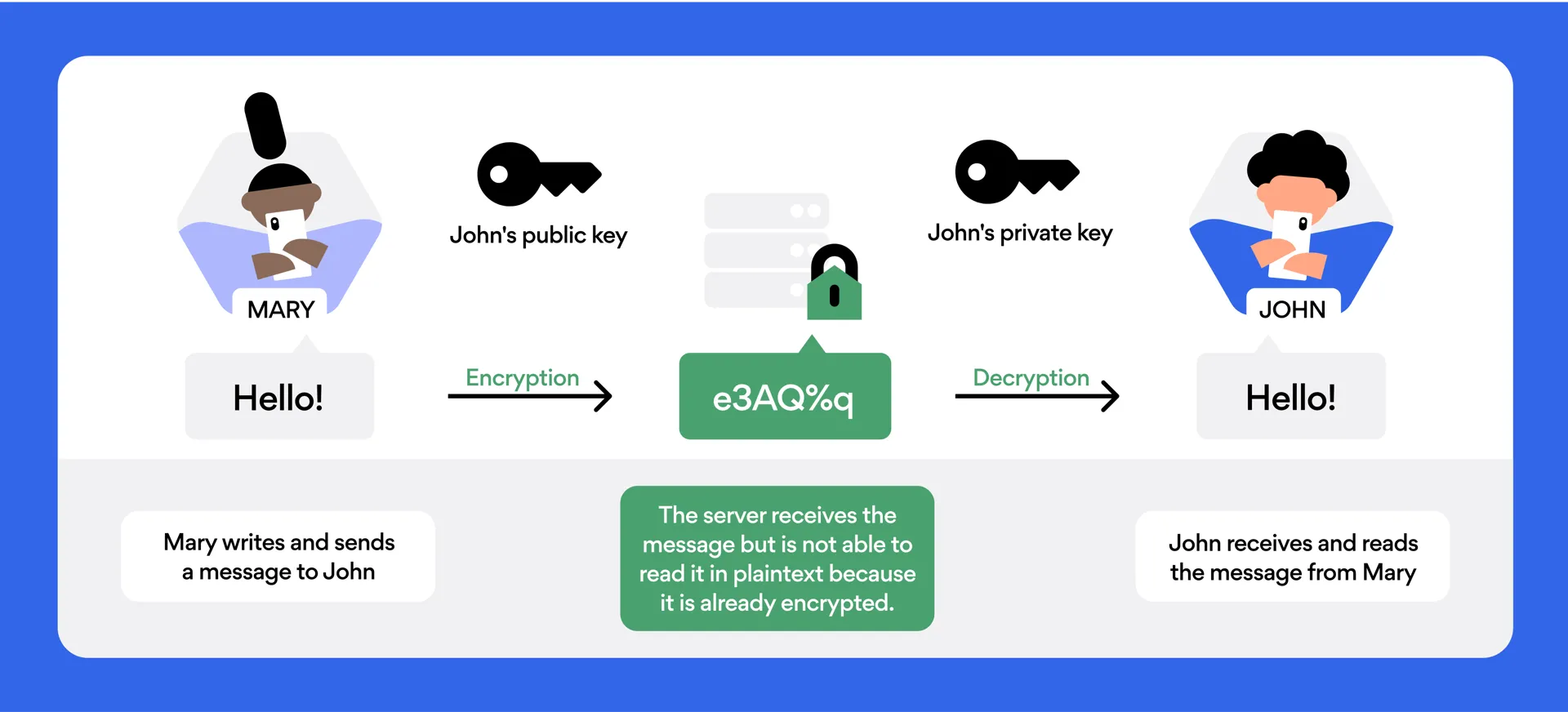
End-to-End Encryption (E2EE) is a system of secure communication where data is encrypted on the sender’s device (the origin endpoint) and decrypted only on the recipient’s device (the destination endpoint).
The defining feature of E2EE is that no intermediary—not even the service provider, network operator, or server host—can access the unencrypted data. Even if an attacker or law enforcement agency intercepts the data in transit or subpoenas the service provider’s servers, they receive only unreadable, scrambled code.
Standard Encryption (In Transit) vs. End-to-End Encryption (E2EE)

Standard Encryption:
[ Sender ] ──(Encrypted)──► [ Server (Decrypted/Re-encrypted) ] ──(Encrypted)──► [ Recipient ]
                                  ▲ (Provider CAN view data)

End-to-End Encryption (E2EE):
[ Sender ] ═════════════════(Encrypted Entire Route)═════════════════► [ Recipient ]
                                  ▲ (Provider CANNOT view data)
How End-to-End Encryption Works: The Mechanics
End-to-End Encryption relies on Asymmetric Cryptography (also known as Public-Key Cryptography) paired with Symmetric Cryptography for high-speed performance.
Standard Encryption vs. End-to-End Encryption
Understanding the difference between standard Encryption in Transit (TLS/SSL) and End-to-End Encryption is essential for evaluating digital security:
| Feature | Standard Encryption (in Transit) | End-to-End Encryption (E2EE) |
| Data Protection Location | Encrypted during transport; decrypted at server | Encrypted continuously from endpoint to endpoint |
| Service Provider Visibility | Yes: Provider can read, analyze, or index data | No: Provider holds no decryption keys |
| Server Breach Impact | High risk; leaked server data compromises messages | Minimal risk; stolen server data remains encrypted |
| Key Management | Managed centrally by the service host | Stored locally on user endpoints |
| Common Examples | Traditional web traffic (HTTPS), standard webmail | Signal, WhatsApp, Apple iMessage, ProtonMail |
Key Benefits of End-to-End Encryption

-
Complete Data Privacy: Eliminates eavesdropping by internet service providers (ISPs), public Wi-Fi sniffers, and third-party advertising brokers.
-
Protection Against Server Breaches: If a cloud provider’s database is hacked, attackers extract only ciphertext, rendering the breach useless without individual private keys.
-
Tamper-Proof Integrity: Modern E2EE protocols incorporate cryptographic checks (such as HMACs) to ensure data cannot be altered or modified in transit without detection.
Limitations and Practical Realities
While E2EE provides robust transmission security, it does not solve every cybersecurity challenge:
-
Endpoint Vulnerabilities: If a device is infected with malware, keyloggers, or screen-recording spyware, an attacker can read messages directly off the screen—bypassing encryption entirely.
-
Metadata Is Still Visible: While E2EE protects message content, metadata (such as who you talked to, when you communicated, and the size of the payload) is often visible to service providers.
-
Key Recovery Risks: Because service providers do not hold your private key, if you lose your local device recovery phrases or backup keys, access to your historical encrypted data may be lost permanently.
End-to-End Encryption is a foundational technology for personal privacy and digital freedom. By ensuring that user keys remain strictly on local devices, E2EE provides a critical safeguard against data leaks, surveillance, and unauthorized access across an interconnected world.