
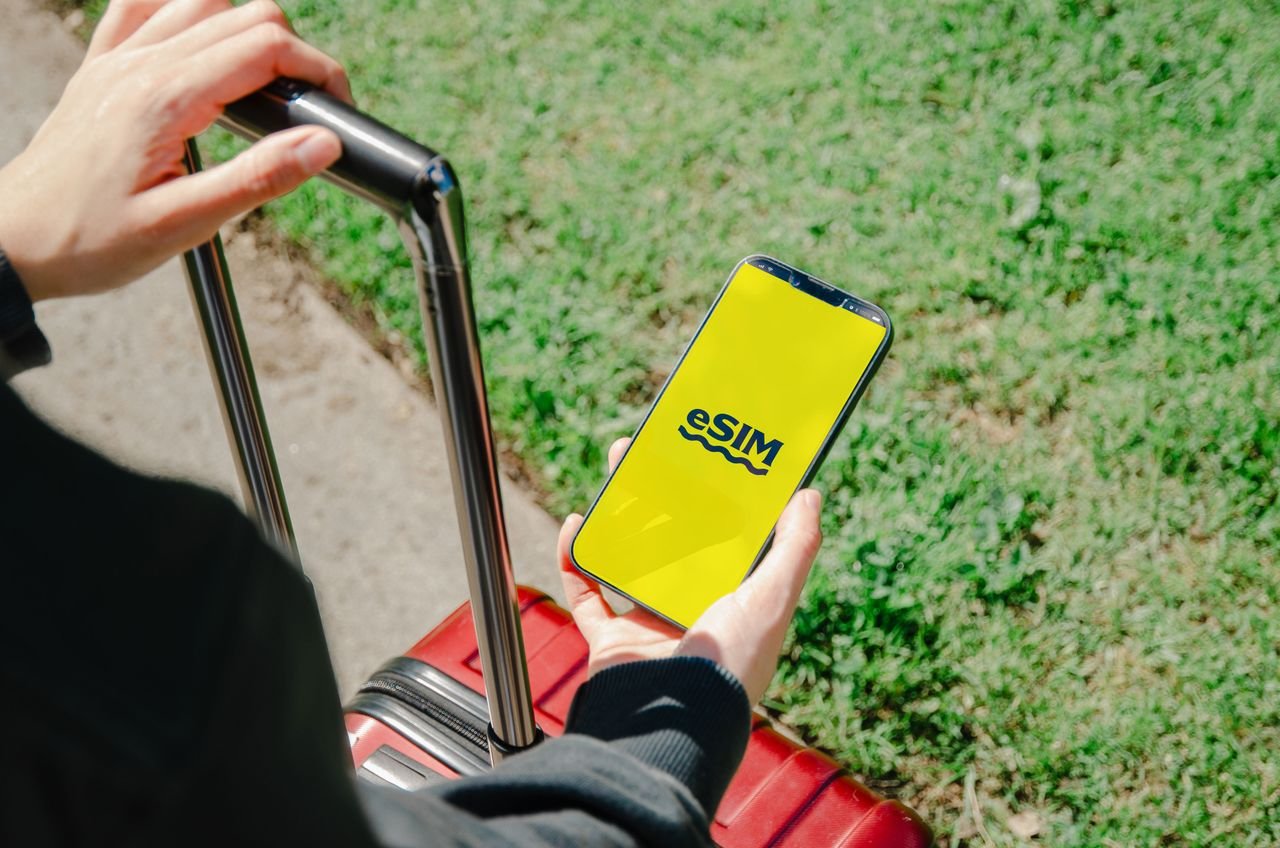
For decades, connecting a mobile phone to a cellular network required popping open a SIM tray and inserting a physical piece of plastic with a tiny microchip. An eSIM (Embedded Subscriber Identity Module) replaces that physical card with a permanently built-in programmable chip inside your device.
1. What Is an eSIM?
An eSIM is a small chip built directly into a device’s motherboard during manufacturing. It performs the exact same function as a traditional physical SIM card—authenticating your identity with a cellular carrier to grant access to voice, text, and data networks—but it operates entirely digitally through software.
2. How eSIM Technology Works
Instead of storing subscriber credentials on a fixed hardware card, an eSIM utilizes Remote SIM Provisioning (RSP) technology to download carrier network data over the air.
                    How Remote SIM Provisioning Works

 ┌─────────────────┐       1. Request Profile       ┌──────────────────┐
 │ User Device     │ ────────────────────────────►  │ Carrier Server   │
 │ (eSIM Chip)     │                                │ (SM-DP+ Platform)│
 │                 │ ◄────────────────────────────  │                  │
 └─────────────────┘       2. Secure Encrypted      └──────────────────┘
                            Profile Download
Key Technical Mechanisms
-
eUICC (Embedded Universal Integrated Circuit Card): The secure hardware chip soldered onto the phone board. Unlike standard SIMs, eUICC chips support multiple profile storage slots.
-
SM-DP+ (Subscription Manager Data Preparation): A secure cloud platform operated by carriers that creates, encrypts, and delivers network profile packages directly to your device via a QR code or carrier app.
-
Over-The-Air (OTA) Activation: When you scan an activation QR code, your device connects to the carrier’s SM-DP+ server, authenticates, and installs the encrypted cellular profile onto the eUICC chip in seconds.
3. Physical SIM vs. eSIM: Detailed Comparison
| Feature | Physical SIM (Nano-SIM) | eSIM (Embedded SIM) |
| Form Factor | Removable plastic chip (12.3 x 8.8 mm) | Built-in internal chip (approx. 6 x 5 mm) |
| Profile Capacity | 1 profile per physical card | 5–10+ profiles stored on-device |
| Active Connections | 1 connection per SIM tray slot | Dual SIM active (or multiple active profiles) |
| Carrier Switching | Requires physical swap or mail delivery | Instant digital download via software settings |
| Space & Design | Requires internal card tray mechanism | Saves internal space for battery/cooling |
| Water Resistance | SIM slot requires rubber gasket sealing | No external slot required (easier waterproofing) |
4. Major Advantages of eSIM
-
Instant Switching & Travel Convenience: Traveling internationally no longer requires searching for a physical airport SIM kiosk. Travelers can purchase local data plans online and activate them via QR code before landing.
-
Multiple Profiles & Dual SIM Functionality: Users can store multiple operator profiles on a single device and seamlessly manage a work number and a personal number without swapping cards.
-
Enhanced Device Security: If a smartphone with an eSIM is stolen, the thief cannot remove the SIM card to disconnect it from cellular tracking networks. The eSIM remains locked to the device.
-
Better Hardware Design: Eliminating the physical SIM slot frees up crucial interior space for larger batteries, additional sensors, or improved water and dust resistance (IP68).
5. Challenges and Drawbacks
-
Device Switching Complexity: Moving a line to a new phone isn’t as simple as swapping a piece of plastic; it requires generating a new QR code or using carrier-assisted digital transfer protocols.
-
Troubleshooting Constraints: If a phone screen breaks or the device fails to boot, recovering the line immediately requires carrier support rather than inserting the SIM into a spare backup phone.
-
Legacy Compatibility: While widely adopted in modern smartphones, smartwatches, and laptops, budget devices and older networks in developing regions may still rely exclusively on physical SIM cards.